The Israeli-Palestinian Battles and Military Campaigns
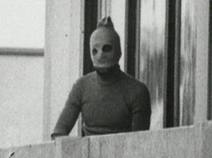
Munich Massacre
Palestinian Terrorist at 1972 Munich Olympics
The Israeli-Palestinian Battles and Military Campaigns—(1964-Present):
As shown in the Israeli-Palestinian Conflict page, the historical and religious animosity between Israel and the Palestinians runs deep. After the formation of the Palestine Liberation Organization, and under the leadership of Yasser Arafat, Palestinian guerilla/commando/terrorist groups began a series of organized and increasingly violent attacks on Israel itself and on Israeli targets around the world. Israel responded in various ways, including commando raids of their own, assassinations of PLO leaders and operatives around the world, and, at times, full-scale invasions of neighboring countries, such as Lebanon, which gave the PLO aid and sanctuary. Over the decades, this Israel-Palestine Conflict has evolved and changed, with violence being a constant in these Israel-Palestinian wars.
PREDECESSOR: (Related conflicts and events that occurred before)
The Great Arab Uprising (1936-1938)
CONCURRENT: (Related conflicts occurring at the same time)
1948 Arab-Israeli War (1948-1949)
Suez/Sinai War (1956)
1967 Arab-Israeli War (1967)
War of Attrition (1968-1970)
1973 Arab-Israeli War (1968-1970)
Jordanian Civil War (1970-1971)
Lebanese Civil War (1975-1992)
Israeli Invasion & Occupation of South Lebanon (1982-2000)
Second Persian Gulf War/Operation Desert Storm (1990-1991)
Third Persian Gulf War/ Iraq War (2003-Present)
Iraq Civil War (2006-Present)
Syrian Civil War (2011-Present)
Egyptian Political Unrest (2011-Present)
SUCCESSOR: (Related conflicts that occur later)
None yet as this is an ongoing conflict
The 1960s
–January 2, 1965, a three-man commando unit from the Palestinian faction known as Fatah crossed into Israel from Jordan and planted explosives at the Israeli National Carrier water canal in the Beit Netopha Valley. The commandos then slipped back across the border. An Israeli water company worker found the explosives and disarmed them. The three commandos encountered a Jordinian patrol on the other side of the border and, when refusing to turn over their weapons, were fired on by the Jordanians, resulting in one Palestinian death. This commando raid into Israeli territory marks the beginning of the military conflict between the Palestinian Liberation Organization (PLO) and the Israelis. Fatah was (and still is), a major faction in the PLO. The Palestinian commandos called themselves “Fedayeen,” which means “one who sacrifices himself.” The term is applied to all Palestinian commandos or guerrillas regardless of which Palestinian military faction they belonged to. (See Palestinian military factions).
–January through March, 1965, Fatah conducted ten raids into Israeli territory, seven from Jordan, and three from Egyptian-controlled Gaza.
–Throughout 1965, Fatah launched a total of 35 raids into Israel from the neighboring Arab states.
–1966: A total of 66 raids were conducted into Israel by various Fedayeen groups.
–1967: A total of 37 raids were conducted into Israel by various Fedayeen groups from the beginning of 1967 to the beginning of the Six-Day War in June.
–December 26, 1968 –two Palestinian gunmen traveled from Beirut to Athens, and attacked an El Al jet and killed one. On December 28,1968, Israel troops landed in Beirut, Lebanon and destroyed 13 civilian aircraft at Beirut International Airport.
The 1970s
–May 8, 1970: Three Palestinian gunmen crossed the Lebanese border into the agricultural community of Avivim and ambushed the local school bus, killing nine children and three adults, and wounding 19 other children.
–September 4, 1972: Munich Olympic’s Massacre–Members of “Black September,” a PLO offshoot, attacked the Israeli Olympic team in their dormitory at the 1972 Munich Olympic Games in Germany. As a result of the hostage-taking and the bungled attempt by the Germans to rescue the prisoners, eleven Israeli athletes and one German policman were killed. This attack prompted Israel to launch “Operation Wrath of God” and “Operation Spring of Youth.” See below for details.
Video of the 1972 Munich Massacre of Israeli Athletes by Palestinian Terrorists
–Beginning in the Fall of 1972: Israel’s launched “Operation Wrath of God” to track down and kill members of the PLO involved in the Munich attack. This operation continued for several years and resulted in the assassinations of several members of the PLO around the world.
–March 1, 1973: Eight members of Black September took over the Saudi Arabian embassy in Khartoum, Sudan. Among the hostages were two American diplomats, Ambassador Cleo Noel, and Deputy Ambassador George Curtis Moore. Both Americans and Belgian diplomat, Guy Eid were killed.
–April 9-10, 1973:Israel’s “Operation Spring of Youth” was launched as part of the Israel’s overall response to the Munich Olympic Attack. Special units of the Israeli Defense Forces attacked several PLO targets in Beirut and Sidon, Lebanon.
In this operation, three of the PLO leaders (Yusef Al Najjar, Kamal Adwan and Kamal Nasserin), were killed, along with several dozen other PLO personnel. Several Lebanese security people and civilians were also died in this operation. Israel suffered two casualties in this attack.
— April 11, 1974: three guerillas of the Popular Front for the Liberation of Palestine (PFLP), infiltrated the Israeli settlement of Kiryat Shmona from Lebanon, killing eighteen residents of an apartment building, including nine children. The attackers died in battle with Israeli troops.
–May 15, 1974: Fighters of the Democratic Front for the Liberation of Palestine (DFLP) entered the Israeli border town of Ma’alot from Lebanon, killed five adults and seizing hostages in a school building. All of the attackers died in battle with Israeli forces, but not before they killed 21 of the school’s students.
–June 27-July 4, 1976: “Operation Entebbe“: On June 27, an Air France flight from Tel Aviv was hijacked by four terrorists, two from the Popular Front for the Liberation of Palestine — External Operations (PFLP-EO) and two from the German terrorst group, “Revolutionäre Zellen.” The plane eventually ended up at Entebbe Airport in Uganda, which was then ruled by dictator Idi Amin. Amin was friendly to the Palestinian cause, and aided the terrorists. Once on the ground, three more Palestininans joined the hijackers. Demands were made for the release of prisoners held by Israel.
Israel responded with a commando raid on the night of July3/July 4. Around 100 Israeli troops in four military transport planes landed at night and rescued the hostages. As a result of the rescue operation,100 of the 103 hostages were freed. Three hostages died. One Israeli soldier died, while 45 Ugandan soldiers were killed eleven Ugandan Army Air Force fighter planes were destroyed on the ground to prevent them from following the Israeli air planes carrying the rescued hostages and the troops.
–March 5,1975: A force of eight PLO fighters sailed from to Tel Aviv by sea from Lebanon. Once inside Israel, they entered the Savoy Hotel, and took dozens of hostages. In the ensuing battle for the hotel, seven of the eight Palestinians and three Israeli troops died, while eight civilians were killed and 19 wounded.
— March 11, 1978: Eight Fatah guerillas entered Israel from Lebanon. After killing an American tourist on the beach, the guerillas hijacked a bus on the coastal road near Haifa. In the ensuing bus chase and battle, six Palestinian guerillas and 35 of the passengers died. Seventy-One civilians were wounded. Israel’s response to this “Coastal Road Massacre” was to launch a full-scale invasion of South Lebanon in order to root out the PLO forces based there.
— March 14, 1978: Israel launched Operation Litani,a full-scale invasion of South Lebanon with 25,000 troops in an effort to force the PLO away from Israel’s vulnerable northern border
The 1980s
–July 27, 1980: Attack on Jewish school in Antwerp, Belgium by terrorists associated with the Palestinian Abu Nidal.
–July 27, 1980: Abu Nidal claimed responsibility for the murder of an Israeli commercial attachee in Brussels, Belgium.
–May 1, 1981: Assassination of Heinz Nittel in Vienna, Austria by Abu Nidal’s forces. Nittel was President of the Austrian-Israeli Friendship Association.
–June 3, 1982: Attempted assassination in London of Israeli Ambassador to the United Kingdom, Shlomo Argov. Israel accused the PLO of the attack, and the Argov attack was one of the incidents which provoked the Israeli invasion of Lebanon on June 6, 1982 called “Operation Peace in Galilee. Argov survived the attack, but was permanently disabled.
–September 25, 1985: Three Israeli civilians were killed on their yacht off the coast of Larnaca, Cyprus by commandoes of al-Fatah’s elite “Force 17.”
–Oct. 1, 1985: Israel’s “Operation Wooden Leg,” attempted to kill PLO Chairman Yasser Arafat with an air raid on his headquarters in Tunis, Tunisia. Arafat survived, though at least 60 members of the PLO died. Israel said this attack was in response to the yacht attack off Larnaca, Cyprus.
–Oct. 7, 1985: The hijacking of the passenger cruise shipAchille Lauro. Members of the Palestine Liberation Front (PLF), led by Abu Abbas, killed Jewish American tourist Leon Klinghoffer. After several days, the hijackers agreed to a deal in which they would release the ship in return for a flight to Tunisia. The Egyptian airliner carrying the hijackers was intercepted by U.S. Navy fighter planes on Oct. 10 and forced it to land at a military base in Italy, where the terrorists were arrested by Italian authorities.
–December 27, 1985: Rome/Vienna Airport Attacks–Abu Nidal’s Fatah – the Revolutionary Council (FRC) staged two attacks in Europe which killed 18 civilians and wounded 140. The terrorists attacked passengers at airports in Rome and Vienna. The FRC claimed these attacks were in response to the October 1st Israeli air raid on Tunis.
First Intifada (1987-1993)–Palestinian uprising against Israeli rule in the occupied territories of the West Bank and Gaza Strip. The Intifada ended with the 1993 Oslo Peace Accords between Israel and the PLO.
Second Intifada (2000-2005)–A period of violence and combat between the Palestinian Authority and Israel. This conflict led to a peace deal that ended Israeli occupation of the Gaza Strip, in a “Land for Peace” agreement. By 2007, the radical Palestinian Jihadist group, Hamas, had violently taken control of Gaza in a civil war with the Palestinian Authority. Soon thereafter, Hamas began launching attacks on Israel, leading to multiple “Gaza Wars” between Israel and Hamas.
1st Gaza War (2008-2009) was a conflict between Israel and the Palestinian group Hamas, which had taken control of Gaza. This page also contains updated information on the fighting between Palestinians and Israelis in and around the Gaza Strip in recent years.
2nd Gaza War (2012)–Code-named by the Israeli military as Operation Pillar of Defense.
3rd Gaza War 2014: Operation Protective Edge-Israel and Hamas traded rocket and missile attacks, leading Israel to launch a major operation to try to stop Hamas attacks. Israel also blamed Hamas for the kidnapping and murder of three Israeli teenagers in the summer of 2014. Operation Protective Edge began on July 8, 2014 with multiple air strikes. Both Israel and Hamas launched commando raids into each other’s territory, and Israel began a large ground offensive on July 17, 2014.
4th Gaza War 2023-In a surprise attack on October 7, 2023 (almost 50 years to the day of the start of the 1973 war), Hamas launched over 2,200 rockets and missiles into Israel. While under cover of this initial barrage, Hamas troops launched a combined ground, air, and sea-borne invasion of southern Israel. As of the first day, combat raged across multiple Israeli border towns and military and police outposts. Initial reports cited over 100 Israeli dead, mostly civilians. News reports also show Israeli civilians being taken back to Gaza, presumably as hostages. Israel responded with massive strikes into Gaza, while Prime Minister Netanyahu declared that Israel was in a full war, and ordered military mobilization.
Print Sources on the Israel-Palestinian Conflict:
Fedayeen: The Arab-Israeli Dilemma (The Free Press, 1973), by John Laffin. This book has a decidedly pro-Israel tilt, but outlines the formation of the PLO, and the internal dissensions and conflicts dividing the various Palestinian factions.
Israel’s Border Wars, 1949-1956: Arab Infiltration, Israeli Retaliation, and the Countdown to the Suez War (Oxford University Press, 1997) by Benny Morris. This is a very detailed look at the initial Palestinian response to al-Nakba (Arabic for “The Cataclysm”) in which large portions of the Palestinian population fled Palestine after the 1948-1949 war. It was hard to find in the late 90’s when I bought it, and I think it may be out of print. Worth hunting for!
No Victor, No Vanquished: The Yom Kippur War (Presidio Press, 1978) by Edgar O’Ballance. Another very well-done look at a major Arab-Israeli War and the background to the conflict.
The Third Arab-Israeli War (Archon Books, 1972), also by Edgar O’Ballance. A good book on the 1967 War.
Six Days of War: June 1967 and the Making of the Modern Middle East (Presidio Press, 2003) by Michael B. Oren. This is a more recent book that also provides a lot of background to the Arab-Israeli conflict in general, and a good analysis of why the 1967 war should be considered THE major turning point in the history of the Arab-Israeli conflict.
Internet Sources on the Israel-Palestine Conflict
Nakba–-Recounts al-Nakba (Arabic for “The Cataclysm”) in which large portions of the Palestinian population fled Palestine during the 1948-1949 Arab-Israeli War.
Fateh Online–English language version of the al-Fatah movement’s website.
BBC NEWS | In Depth | Israel and the Palestinians –Objective information from the BBC.
The Electronic Intifada –Official website of the Palestinian National Authority.
Middle East 101 –Click on “Sticking Points” for a succinct rundown of the issues from both sides, courtesy of the Christian Science Monitor.
Mideast: Centuries of Conflict –CNN’s In-Depth Special makes a good starting point for background information and news. Go to “Maps: Occupied lands” for a helpful clickable map of the disputed regions.