War of 1812-Connected Conflicts
Connected Conflicts Introduction
This article is part of a series that explores the connections between various conflicts: wars, rebellions, political crises, and other major events that lead to or are connected with specific wars and military actions.
Now we will look at the War of 1812. The article starts with a very brief summary of the war itself and then looks at three types of connected conflicts:
- Predecessor Conflicts, which are prior related conflicts leading to the war we examine.
- Concurrent Conflicts, which are related conflicts occurring at the same time as the war we examine.
- Successor Conflicts, which are related conflicts occurring after the war we examine. If we are looking at a recent or currently ongoing conflict, this category may be incomplete or empty.
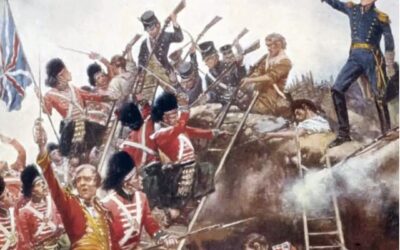
The War of 1812 (1812-1815) was a major war fought between the United States and Great Britain against the global backdrop of the Napoleonic Wars, in which Britain was a major participant against France. This Second Anglo-American War emerged from long-standing disputes involving British interference with American trade, the forced impressment of American sailors into the British Royal Navy, British support for Native American resistance on the American frontier, and American expansionist ambitions toward Canada. Though neither side achieved a decisive military victory, the war strengthened American nationalism, weakened Native American resistance in the American Northwest and South, and confirmed the continued independence of the United States. The conflict also marked the final major war between Britain and the United States. It should be noted that even though Britain was at war with both France and the United States, there was no alliance or cooperation between the Americans and the French.
CONFLICTS RELATED TO THE WAR OF 1812:
Predecessor Conflicts: (Prior related conflicts leading to the War of 1812)
American Revolutionary War (1775-1783): The American colonies successfully fought for independence from Great Britain. However, many political, economic, territorial, and military disputes between the United States and Britain remained unresolved after the war.
British Support for Native American Resistance in the Old Northwest (1783-1813): Following the American Revolutionary War, British authorities in Canada continued supporting Native American tribes resisting American expansion into the Northwest Territory. Britain supplied weapons, ammunition, trade goods, and diplomatic support to Native American tribal confederations trying to stop American settlement west of the Appalachian Mountains.
Many Americans believed British agents actively encouraged frontier raids and Native resistance against the United States. The British still held onto forts in territory that officially belonged to the U.S. in violation of the Treaty of Paris (1783) British forts in the Great Lakes region remained important centers of support for Native American allies until after the Jay Treaty of 1794. Continued British influence among Native tribes contributed heavily to growing anti-British sentiment among Americans in the years leading up to the War of 1812.
Northwest Indian War (1785-1795): Native American tribes in the Northwest Territory resisted American expansion after the Revolutionary War. British support and influence among Native tribes contributed to growing tensions between the United States and Britain. This is also referred to as “Little Turtle’s War,” after the primary Native leader. This war includes the American defeat at the Battle of the Wabash, in which the U.S. lost 1,000 troops.
French Revolutionary Wars (1792-1802): The wars between Revolutionary France and Britain disrupted international trade and placed increasing pressure on neutral American shipping. Britain’s need for more naval personnel led the Royal Navy to stop American ships on the high seas and “impress,” or kidnap sailors they claimed were Royal Navy deserters. This policy of impressment was a major factor leading to the War of 1812.
Quasi-War with France (1798-1800): The United States fought an undeclared naval conflict with Revolutionary France in the Caribbean and Atlantic while attempting to remain neutral during the European wars.
First Barbary War (1801-1805): The United States fought the Barbary pirate states of Tripoli in North Africa over their attacks on American shipping. This war contributed to growing American naval development before the War of 1812. This war was America’s first expeditionary conflict outside of the Americas.
Napoleonic Wars (1803-1815): Global conflict between Napoleonic France and Great Britain (and many other nations, primarily in Europe) dominated global politics during the early Nineteenth Century. British naval restrictions, trade blockades, and impressment policies against neutral shipping heavily affected the United States. Also, Napoleon’s need for money to fight his wars was one factor in his decision to sell the Louisiana territory to the United States, which effectively doubled the size of the U.S.
The British and French were at war continuously from 1803 through Napoleon’s first abdication in April, 1814. The war resumed in March, 1815 when Napoleon escaped exile, reclaimed leadership of France, and was then defeated at Waterloo. The British and Americans signed the Peace of Ghent in on December 24, 1814, though the final battle at New Orleans would take place on January 8, 1815.
Tecumseh’s War (1810-1813): Shawnee leader Tecumseh organized a Native American confederation to resist American westward expansion. Many Americans believed Britain was supporting Native resistance movements in the Northwest. This war blended into the British-American War of 1812.
Chesapeake-Leopard Affair (1807): The British warship HMS Leopard attacked the American frigate USS Chesapeake off the coast of Virginia after demanding the right to search for alleged British deserters. British sailors boarded the American ship and forcibly removed several crewmen.
The incident outraged the American public and became one of the major causes of anti-British anger before the War of 1812. The affair highlighted the issue of British impressment of American sailors and intensified calls for stronger American resistance against Britain.
Battle of Tippecanoe (1811): American forces under William Henry Harrison defeated Native American warriors associated with Tecumseh’s Confederacy in the Indiana Territory. The battle intensified frontier tensions and strengthened anti-British sentiment in the United States. Part of Tecumseh’s War.
Little Belt Affair (1811): The USS President and the British warship HMS Little Belt engaged in a brief naval battle off the coast of North Carolina after both sides mistakenly believed the other intended hostile action. The British ship suffered heavy damage and casualties during the engagement.
The incident further escalated tensions between the United States and Great Britain only months before the outbreak of the War of 1812. Both nations blamed the other for starting the confrontation, and the affair increased fears that open war had become inevitable.
Concurrent Conflicts: (Related conflicts occurring at the same time as the War of 1812)
Creek War (1813-1814): A civil war erupted within the Creek Nation between factions supporting American relations and the anti-American “Red Stick” movement. The United States, led in part by Andrew Jackson, intervened and decisively defeated the Red Sticks.
Also, the Creek War included an American military invasion of Spanish Florida. General Andrew Jackson invaded Florida and captured the Spanish city of Pensacola from a combined Spanish-British force.
Tecumseh’s War (1811-1813): Native American resistance under Tecumseh and his allies continued during the War of 1812, particularly in the Northwest Territory and Great Lakes region. Also a part of the War of 1812, as Tecumseh’s forces allied with the British.
U.S. Invasions of Canada (1812-1815): British regular forces, Canadian militia, and Native American allies defended Canada from repeated American invasions during the war. While these invasions were a major component of the War of 1812, they should be mentioned here since the British-Canadian defense of Canada helped establish a Canadian identity and is considered a significant part of Canadian military history. Also, the burning of the city of York by the Americans was cited as a reason for the British torching of Washington D.C. (including the White House) later in the war.
War of the Sixth Coalition (1813–1814) and the War of the Seventh Coalition/The Hundred Days (1815): Britain remained heavily involved in Europe fighting Napoleon Bonaparte during most of the War of 1812. The eventual defeat of Napoleon allowed Britain to send larger forces to North America during the later stages of the war.
Successor Conflicts: (Related conflicts occurring after the War of 1812)
The Second Barbary War (1815): The Barbary states took advantage of America’s distraction during the War of 1812 to prey on U.S. merchant ships again. After peace with Britain, the U.S. Navy travelled to the Mediterranean Sea to deal with these maritime hostilities. The U.S. Navy waged a very brief war with the North African state Algiers, leading to a peace treaty with Algiers and other Barbary states. Also referred to as The Algerine War.
First Seminole War (1816-1818): The United States launched military operations against the Seminoles in Spanish Florida following frontier violence and raids. Andrew Jackson, already a national hero due to his victory in the Battle of New Orleans, gained even more notoriety through his second invasion of Spanish Florida. As a result of Jackson’s invasion, Spain ceded Florida to the United States in 1819.
American Indian Removal and Various Frontier Wars (1810s-1830s): The weakening of Native American resistance following the War of 1812 accelerated American expansion into Native territories across the Southeast, Midwest, and Great Plains.
Anglo-American hostility continued for several decades, with a few bloodless border disputes.
Aroostook “War” (1838–1839): A bloodless boundary dispute between civilian authorities along the Maine/Canada border. Local militia units on both sides mobilized but never engaged in actual combat.
The Pig War (1859): A military standoff over territorial borders in the San Juan Islands in what was then the U.S. Territory of Washington. The issue, and the eventual U.S.-Canadian border was settled peacefully. The only casualty of this incident was a farmer’s pig.