The Iran Cease-Fire Deal Looks Like A Bad Deal for America
The Iran Cease-Fire Deal Looks Like A Bad Deal for America
Current Events: May 24, 2026
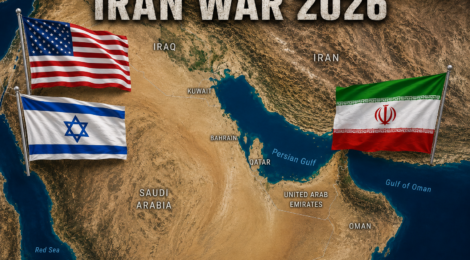
The newly announced cease-fire agreement between the United States and Iran is being promoted by the Trump Administration as a diplomatic breakthrough that will stabilize the Middle East and reopen the Strait of Hormuz. In reality, however, the deal increasingly appears to be a weak and badly negotiated settlement following a war that the administration itself helped escalate without a clear long-term strategy.
President Donald Trump announced on May 23 that an agreement between the United States and Iran had been “largely negotiated,” with additional details expected soon. The proposed arrangement reportedly includes reopening the Strait of Hormuz, easing the American naval blockade against Iran, and beginning a new round of negotiations regarding Iran’s nuclear program.
But critics of the agreement, including many conservatives and pro-Israel hawks, argue that the deal effectively rewards Iran after months of costly conflict. Reports indicate that Iran may retain portions of its nuclear infrastructure, maintain much of its ballistic missile capability, and continue supporting regional proxy groups such as Hezbollah and the Houthis.
If those reports prove accurate, then the United States will have spent months fighting a dangerous regional war only to return to a situation remarkably similar to the one that existed before the conflict began. In addition, multiple reports of shortages in America’s arsenal of high-tech missiles puts the U.S. military at a disadvantage if hostilities renew, or other military challenges arise around the globe.
The Trump Administration’s handling of the Iran War increasingly resembles a pattern already seen in other recent American military operations. The administration launched aggressive military action without clearly defining either achievable political objectives or a realistic endgame. Early American and Israeli strikes inflicted serious damage on Iran, but they failed to collapse the Iranian government or eliminate Iran’s ability to retaliate militarily.
Instead, Iran responded with missile attacks, naval threats in the Persian Gulf, proxy warfare across the Middle East, and the closure of the Strait of Hormuz. The resulting disruption to global energy markets created enormous economic pressure internationally and placed Washington under growing pressure from allies and financial markets alike.
Now President Trump appears eager to secure almost any cease-fire that allows the White House to claim victory and reduce economic instability before the political situation worsens further. Republican members of Congress are facing an increasingly hostile electorate heading into the November, 2026 mid-term elections, and this war and the higher cost of living that goes with it, are very unpopular with the GOP voter base.
The problem for America and the hope for an ongoing peace, is that Iran likely interprets this agreement not as American strength, but as American exhaustion and impatience. Again, think of the missile shortage issue. Tehran survived the military campaign, maintained regime control, kept much of its military infrastructure intact, and may now gain sanctions relief and renewed oil exports in exchange for promises that remain vague and difficult to enforce.
Equally troubling is the apparent lack of clarity surrounding Iran’s nuclear program. Some reports suggest Iran may eventually dilute or surrender portions of its highly enriched uranium stockpile, while others indicate the issue has largely been postponed for future negotiations.
That ambiguity alone highlights the weakness of the agreement.
Meanwhile, America’s regional allies are increasingly nervous. Israeli officials reportedly remain deeply concerned that the deal leaves Iran’s regional proxy network largely untouched. Hezbollah, the Houthis, and Iranian-backed militias in Iraq all remain active threats.
The broader strategic lesson may be even more damaging. Once again, the United States demonstrated overwhelming military power, but uncertain political planning. This is a pattern we saw in American wars in Iraq, Afghanistan, and Yemen. Washington escalated rapidly, imposed a blockade, launched strikes, and risked a major regional war, only to eventually negotiate toward terms that resemble a modified version of the status quo, or, in the case of Afghanistan, outright defeat.
For Iran, survival itself will be viewed internally as victory. In effect, the Islamic Republic regime will emerge stronger as a result of this war, based on this bad peace agreement.
The cease-fire may temporarily reduce tensions and stabilize oil markets, but unless the agreement actually dismantles Iran’s nuclear ambitions and weakens its regional proxy network, this conflict is unlikely to remain over for long. Instead, the current deal may simply become just another pause in the decades-long confrontation between the United States, Israel, and the Islamic Republic of Iran.
See also: American Wars by President