Wars
and Conflicts Between Tibet and China
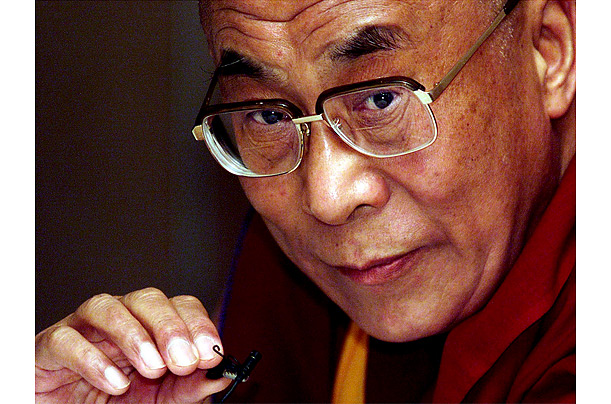
Tibet is a mountainous region located between India, China, and Nepal. Tibetan history, as a separate and independent country, dates back at least to the early 7th century, with the establishment of the Tibetan Kingdom. Modern Tibet gained independence from the Manchu Chinese Empire in 1911, and enjoyed independence until the Communist Chinese invasion of 1950-1951.
Tibetans are a Buddhist people, and the lure of this faith is so powerful in Tibet that the secular leader of Tibet since the late 1500s has been the primary Tibetan Buddhist religious leader, known as the Dalai Lama (meaning "Ocean of Wisdom").
Relations between Tibet and China have been often hostile, sometimes friendly, since the two nations first made contact in the 700s. At times, both Tibet and China came under the domination of foreign conquerors. In the 1200s, the Mongol warlord, Genghis Khan and his heirs ruled Tibet and China, and beginning in the 1600s, both Tibet and China came under the influence of the Manchu Empire. The Manchu ruled China from 1644 until the Chinese Revolution of 1911, and began to gain influence in Tibet in the 1720s. When the Chinese Revolution took place in 1911, ending the Manchu Empire, the people of Tibet rose up against the Imperial troops in Lhasa and regained independence.
Below is a partial listing of wars and conflicts between Tibet and China. It should be noted that the several conflicts from 1911 into the 1930s were attempts by Tibet to throw off Manchu/Chinese domination and to reclaim ethnic Tibetan territory occupied by the Chinese.
670 --War between Tibet and the T'ang dynasty of China. Following this war, Tibetan influence in the Central Asian trade routes grows.
692-- China retook western border lands from the Tibet after defeating Tibetan forces at Kashgar
763--Tibet seizes the Tang Chinese capital city of Chang'an (now Xian)
822-- Peace Treaty between Tibet and China defines the border between them
1207- Tibet surrenders to the Mongol Genghis Khan, who also conquered China.
1368--When the Mongols' Yuan Empire fell in 1368 to the ethnic-Han Chinese Ming, Tibet reclaimed independence and refused to pay further tribute to the new Chinese Emperor.
1911-1913--Tibetan Uprising --During the anti-Manchu Chinese Revolution, Tibetans revolt and force out the Manchu Chinese garrison. The surviving Chinese troops evacuate Tibet by way of British India.
1918--Sino-Tibetan War-- China, having never accepted Tibet's independence, sent troops into eastern Tibet in 1918. This conflict is considered as a stalemate, and ended due to British diplomacy.
1930-1932--Sino-Tibetan War--A Tibetan army attacked Sichuan Province in China, which was then ruled by a warlord named Liu Wen-Hui. China was at the time divided among dozens of "Warlords" who often fought amongst themselves as well as against the central Chinese government. Liu Wen-Hui battled the Tibetans for several years, sometimes with the aid of other warlords, such as the Qinghai province's warlord Ma Bu-Fang. A peace agreement was finally signed in 1932, setting Tibet's eastern border at the Yangtze River.
1950-1951--Chinese Communist invasion and occupation of Tibet. The subsequent occupation and consolidation of Communist control over the Buddhist kingdom resulted in the destruction of thousands of Buddhist temples and the deaths of at least tens of thousands of Buddhist monks and other Tibetan civilians.
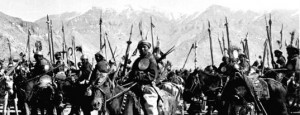
Tibetan Soldiers during the 1950 Chinese Invasion
1956-1959-Tibetan Revolt--Khampa rebels in eastern Tibet rebelled against Communist Chinese rule. Up to 20,000 Tibetan guerrillas battled the Chinese army. By March, 1959, the situation in the capital city of Lhasa had deteriorated as tens of thousands of Chinese troops occupied the city and made preparations for an attack on the Dalai Lama's palace and his guard force. On March 17, 1959, after two Chinese mortar shells landed near his palace, the 14th Dalai Lama escaped from Lhasa with his bodyguards and headed into exile in neighboring India. In Lhasa, the Chinese troops attacked the Dalai Lama's palace, killing thousands of Tibetan civilians who had encircled the palace to prevent the Chinese from seizing their spiritual leader. Over the next several days, severe urban warfare played out in the Tibetan capital, as the Chinese consolidated their control over the city, killing thousands of rebels and civilians. Many Tibetan monks and civil leaders were publicly executed.
Since the Chinese takeover of Tibet, in addition to the acts of brutality against the native population and the religious leaders, Chinese policy has led to a large influx of ethnic Chinese into Tibet. This is termed by many as a form of "Demographic Genocide," with the Chinese culture beginning to supplant the native Tibetan culture.
1956-1974-Chushi Gandrug Resistance Movement--The American Central Intelligence Agency aided Tibetan rebels from 1956 through 1974, when China and the U.S. began to re-establish relations. The Tibetan guerrillas used American-supplied weapons and training to wage a war of resistance to the Communist occupying army. After American aid ended in the early 1970s, the surviving rebels fled to Nepal, where they were wiped out by Nepalese security forces.
March/April, 2008--Tibetan protests against Chinese occupation gain the attention of the world media, in part because China was the host of the 2008 Olympics.
Links and Resources:
Dalai Lama stepping down as Tibetan political leader: Speech comes on anniversary of 1959 uprising against Chinese control --MSNBC, March 9, 2011
 .
5th ed. Binghamton, NY: CQ Press, 2004.
.
5th ed. Binghamton, NY: CQ Press, 2004.