Modern
Egyptian Political and Military History:
1798-1801- French invasion and occupation of
Egypt by Napoleon Bonaparte. This ends Mamluke rule in
Egypt.
1803-1807-Egyptian
Revolution
--
Political violence engulfed Egypt, leading to the
rise of Muhammed Ali as Pasha of Egypt.
1820-1839-Egyptian
Conquest of the Sudan.
1825-1832-Egyptian
intervention to aid the Ottoman Turks in Greek War of
Independence. This war brings Egypt into conflict with
the British, French, and Russians.
1882-British
Conquest of Egypt.
1922-British
declare the independence of Egypt. British still retained
control of Egyptian foreign policy and basic
administration of the country.
1948-1949-War with
Israel in the First Arab-Israeli War. Egypt gains control
of the Gaza Strip.
1948 (December
28)-- Prime Minister Mahmoud an-Nukrashi Pasha, was
assassinated by the Muslim Brotherhood.
1952-Egyptian
Revolution of 1952. King Farouk overthown by Lieutenant
General Muhammad Naguib and Gamel Abdel Nasser. Naguib
becomes Egypt's first President.
1954-Nasser
becomes Prime Minister and effectively rules Egypt with
President Naguib as a figurehead.
1956 (June)-Nasser
becomes President of Egypt. His philosophy of Pan-Arab
cooperation, nationalism, and unity becomes known as
"Nasserism."
1956 (July)-The
United States pulls back from its promise to aid Egypt in
building the Aswan Dam project. Nasser turns to the
Soviet Union for aid, beginning a long and vital alliance
between Egypt and the Soviets.
1956
(October-November)-War with Israel, Britain, and
France in the "Suez
War."
1958-Egypt united
with Syria to form the United Arab Republic. The UAR
existed until Syria's secession in 1961.
1962-1970-Egypt
intervened in the Yemen Civil War. This intervention
brought Egypt into conflict with Saudi Arabia.
1967-War with
Israel. In the Six-Day
War, Israel
defeated Egypt, Jordan, Syria, and Iraq, and siezed
control of the Egyptian-controlled Gaza Strip and Egypt's
Sinai Peninsula.
1968-1970-War with
Israel in the War of Attrition
1970- Nasser dies,
and Vice-President Anwar al-Sadat becomes President of
Egypt.
1973- War with
Israel. The Yom Kippur/Ramadan War paves the way for
eventual peace negotiations to take place.
1974-First
Sinai Disengagement Agreement
between Egypt an Israel. Israel pulled back from part of
the Sinai. This agreement was, in effect, the first
land-for-peace agreement between Israel and an Arab
neighbor.
1977
(January)--Egyptian 'Bread Riots' against economic
reforms. Nearly 80 deaths, and 800 wounded.
1977 (July)-Short
border war
with Libya.
1977
(November)-Sadat goes to Jerusalem and is the first
Arab leader to visit Israel. Sadat spoke before the
Knesset in Jerusalem about how to achieve a comprehensive
peace between Israel and the Arab nations.
1978-Egypt and
Israel sign the Camp
David Accords.
There were two accords, titled A Framework for Peace
in the Middle East and A Framework for the
Conclusion of a Peace Treaty between Egypt and Israel.
The Accords set the stage for the 1979 peace
treaty.
1979-Egypt and
Israel sign the Egypt-Israel Peace Treaty, ending the
state of war that had existed since 1948.
1979-Egypt is
expelled from the Arab League for making peace with
Israel.
1981-Assassination
of President Sadat. Vice-President Hosni
Mubarak assumes
power.
1989-Egypt
readmitted to the Arab League.
1991-War with
Iraq. Egypt took part in the multi-national coalition
that drove Iraqi forces from Kuwait in the
Gulf
War.
2011-Massive
unrest takes
place throughout Egypt with opposition groups calling for
the ouster of President Mubarak.
February 11,
2011--After 18 days of protests and riots,
President Hosni Mubarak turned power over to the
Egyptian military, and left Cairo. See
the Latest News on Egypt
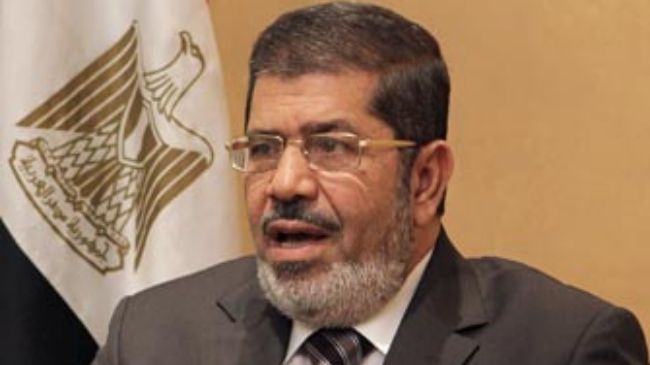
June, 2012--Egyptians vote in their first free
election, choosing Islamist leader Mohammed Morsi
as the President of Egypt. Morsi was the candidate of the
formerly outlawed Muslim Brotherhood. Morsi won with
almost 52% of the vote.
See also:
Egyptian
History
Wars
of Egypt
Suez
War
Six-Day
War
Egypt-Libya
War of 1977
Political
Unrest in Egypt 2011 Timeline
World
Biography: President Hosni
Mubarak